If your child is exhibiting a delay or difference in development, it may be helpful to conduct a Developmental or Autism Spectrum Disorder (ASD) evaluation. We understand how stressful this can be, and the work with parents to alleviate concerns and identify interventions and treatment options.
Evaluations can be conducted for children as young as 12 months of age, to identify delays in milestones in the following areas:
- motor skills
- social communication skills
- cognitive skills
- adaptive skills
- social-emotional development
Often, pediatricians or child-care programs can suggest that children be evaluated due to behavioral problems such as tantrums or difficulties with self-regulation. In many cases, state programs exist to support testing in children under 3 and specialized developmental pediatric clinics are most appropriate for these types of assessments. The reliability of many forms of neuropsychological is limited in children under 5 and thus our assessment services at the Ross Center are more limited at that age. However, as early assessment can result in therapeutic interventions that can greatly improve a child’s progress and potential, our Director of Testing is available for an initial consultation to help navigate considerations for this population.
For children over 5 and above, we utilize the Autism Diagnostic Observation Schedule (ADOS), considered the gold standard tool to diagnose autism spectrum disorder. The provider, specially trained in the ADOS, will engage your child in play-based tasks and questions to build a profile of areas of strength and areas for growth. This will allow the provider to create recommendations for goals that can be used by parents and caregivers, schools, and other specialists, such as speech and language therapists, physical therapists, and occupational therapists.
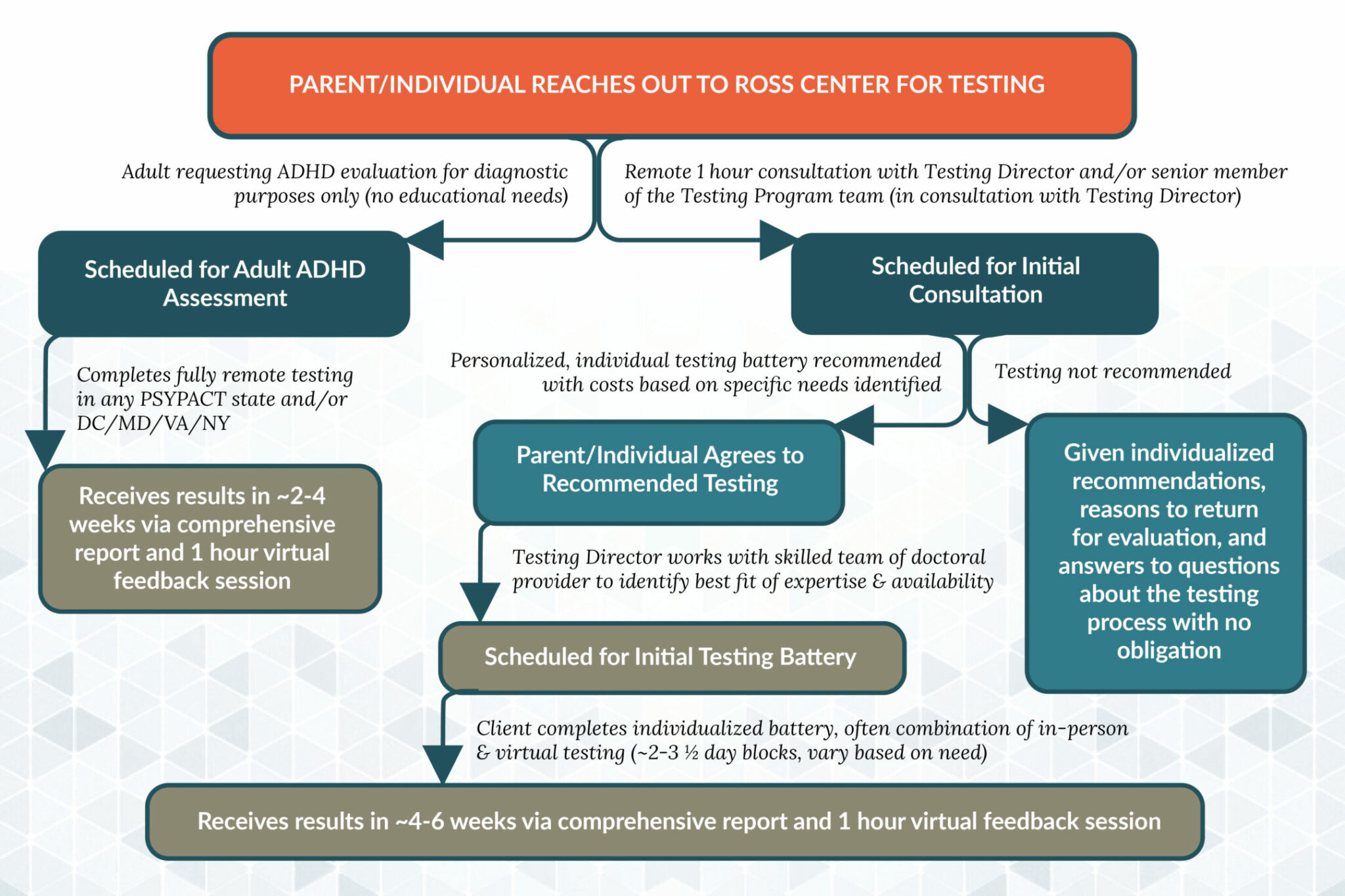
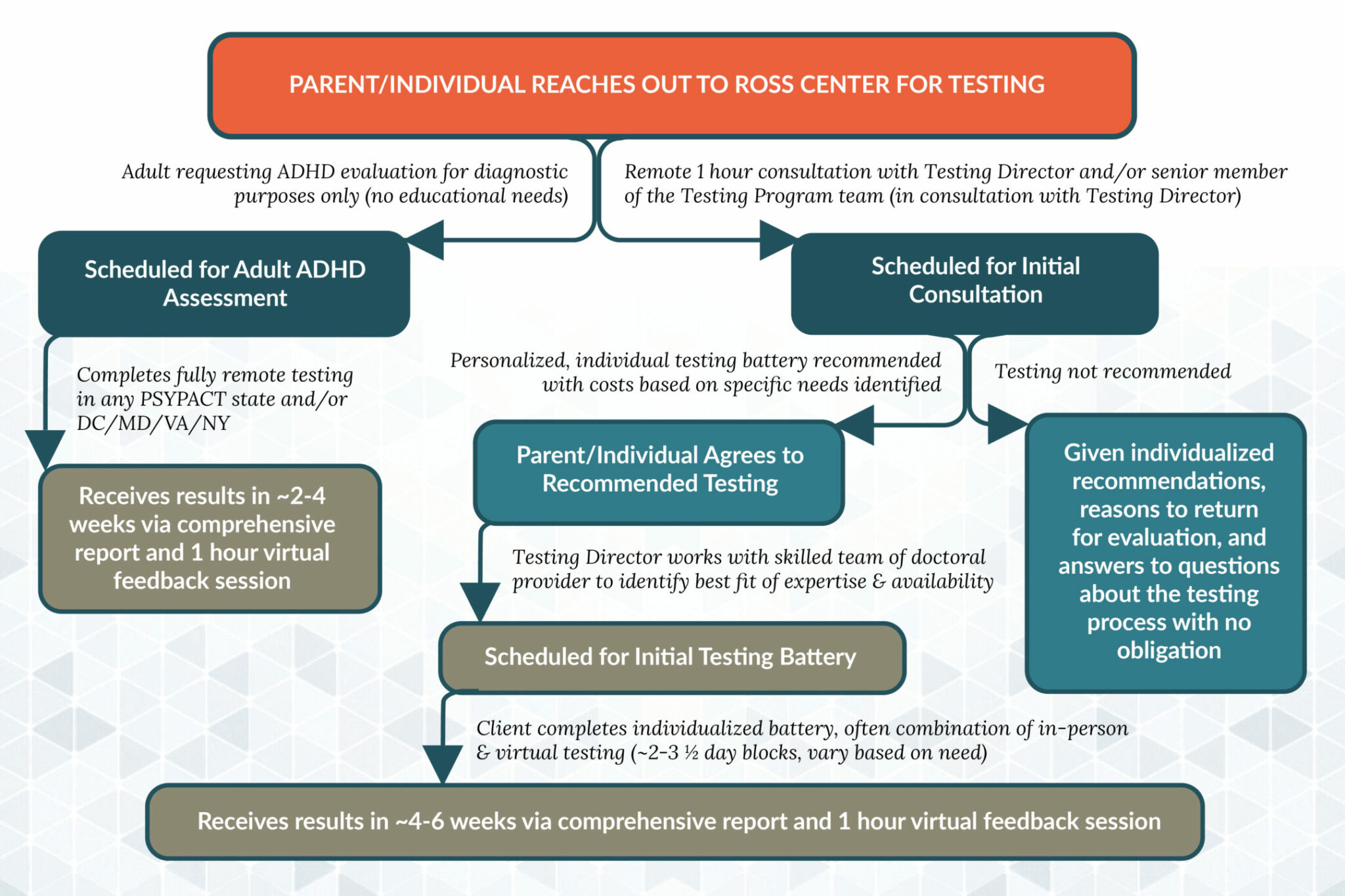
We try to make the experience as easy as possible for families, with age-appropriate observation and in-person sessions to make your child comfortable. The assessment also includes parent interviews, questionnaires, and reviews of medical and developmental history (including available records from previous evaluations, other specialists, or school reports). We may also recommend a combination of neuropsychological tests to understand what’s going on for your child and how you can best support the child’s development.